5 Ignored Disaster Warnings (Part 1)

Max Global: Disasters rarely strike without a prelude. Scientists, engineers, and even radio operators have long raised early alarms, yet bureaucracy, politics, or human hesitation often silence them. This editorial revisits five moments when disaster warnings were clear, credible, and timely, but the response fell short. These historical disaster warnings show a familiar pattern: when early disaster warnings reach leaders but stall in decision-making, risk turns to tragedy.
MAX Global brings you a closer look at lessons the world cannot afford to ignore, and why acting fast is the only reliable antidote to preventable loss.
Nevado del Ruiz, 1985: Maps, Memos, and a Town in the Path

Months of seismic rumbling and gas readings amounted to early disaster warnings, and hazard maps placed Armero directly in the path of deadly lahars (volcanic mudflows). When the volcano erupted on 13 November, the flows arrived hours later, enough time, according to the U.S. Geological Survey, for a coordinated evacuation. Yet the disaster warnings never translated into action. Communication gaps and weak crisis management left 23,000 people buried beneath mud and ash. The tragedy illustrates how risk models and briefings, even when accurate, fail without a command chain empowered to order evacuations and sustain them under public pressure.
Challenger, 1986: An Engineering Red Flag Overruled

On a freezing morning at Cape Canaveral, Morton Thiokol engineers begged NASA to delay the launch, citing O-ring failure risks under extreme cold. Their pleas were ignored, and 73 seconds after liftoff, Challenger disintegrated. The Rogers Commission confirmed the cause: leadership dismissed valid disaster warnings in favor of schedule pressure. In plain terms, this was one of those disasters that could have been prevented if technical warnings had been respected. The case remains a cautionary tale about cognitive bias in high-stakes programs, when success metrics revolve around deadlines, organizations can treat ignored disaster warnings as inconveniences rather than life-and-death decisions.
Read also: The Richest Athletes You’ve Never Heard Of
Titanic, 1912: Wireless Alerts Without Urgency

During Titanic’s maiden voyage, multiple radio advisories from nearby ships warned of massive icebergs in the North Atlantic. Several messages never reached the bridge; others were not treated as urgent. These were clear ignored disaster warnings, but speed and confidence overruled caution. The collision and lack of lifeboats turned a preventable risk into one of history’s most famous maritime tragedies. In a culture that prized record-setting passages and luxury over redundancy, the warning signal competed with status and spectacle, and lost. Disasters that could have been prevented often begin as simple choices about pace, visibility, and humility.
South Fork Dam & The Johnstown Flood, 1889: Neglect as a Policy
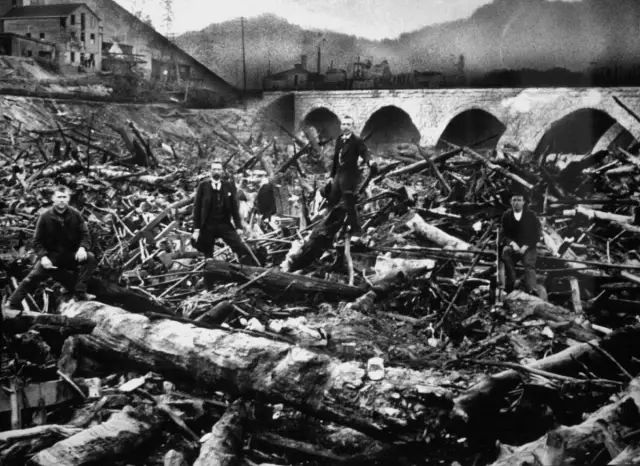
Local engineers had logged historical disaster warnings for years, lowered crest, clogged spillways, and amateur repairs. On 31 May 1889, the dam collapsed, unleashing a torrent that killed more than 2,000 people. The investigation revealed how private ownership, poor maintenance, and government indifference combined to erase every safeguard. This catastrophe stands as one of the earliest disasters that could have been prevented, a reminder that negligence can be as deadly as nature itself. Where responsibility is fragmented, disaster warning systems degrade into paperwork; where accountability is clear, inspections become action instead of archives.
You may also like: Top 7 Crazy Sports You Won’t Believe Exist
Hurricane Katrina, 2005: “Known Weaknesses” in the System

Long before Katrina hit Louisiana, engineers and federal studies warned that New Orleans’ levees, floodwalls, and pumping systems were vulnerable. When the storm struck, those predictions proved true: roughly 80% of the city flooded. Here, disaster warning systems existed on paper, reports, risk models, tabletop exercises, but funding and coordination lagged. The disaster warnings were not new; they were simply ignored. Katrina’s aftermath showed that preparedness is not a document but a budget, a maintenance schedule, and a web of agencies that trust each other enough to share data and act on it without delay.

Across decades, from volcanoes to space shuttles, the signal is always there, experts warn, reports circulate, committees meet. But ignored disaster warnings show that information alone doesn’t save lives; action does. When leaders delay, the cost is measured not in reports, but in casualties. The most effective programs build habits: drill the plan, fund the fix, rehearse the evacuation, and empower someone to say “stop” when early disaster warnings arrive. Public trust also matters; communities act faster when alerts are plain, frequent, and consistent with what people see and feel.
In the end, “wait and see” is a decision. Every one of these tragedies was foreseen in some form, documented by professionals, and preventable through faster coordination. If there’s one takeaway, it’s this: act on disaster warnings the moment they’re credible, because ignored disaster warnings don’t fade; they return as headlines.


