Porter Airlines Flight Canceled After Child Refuses to Buckle Seatbelt

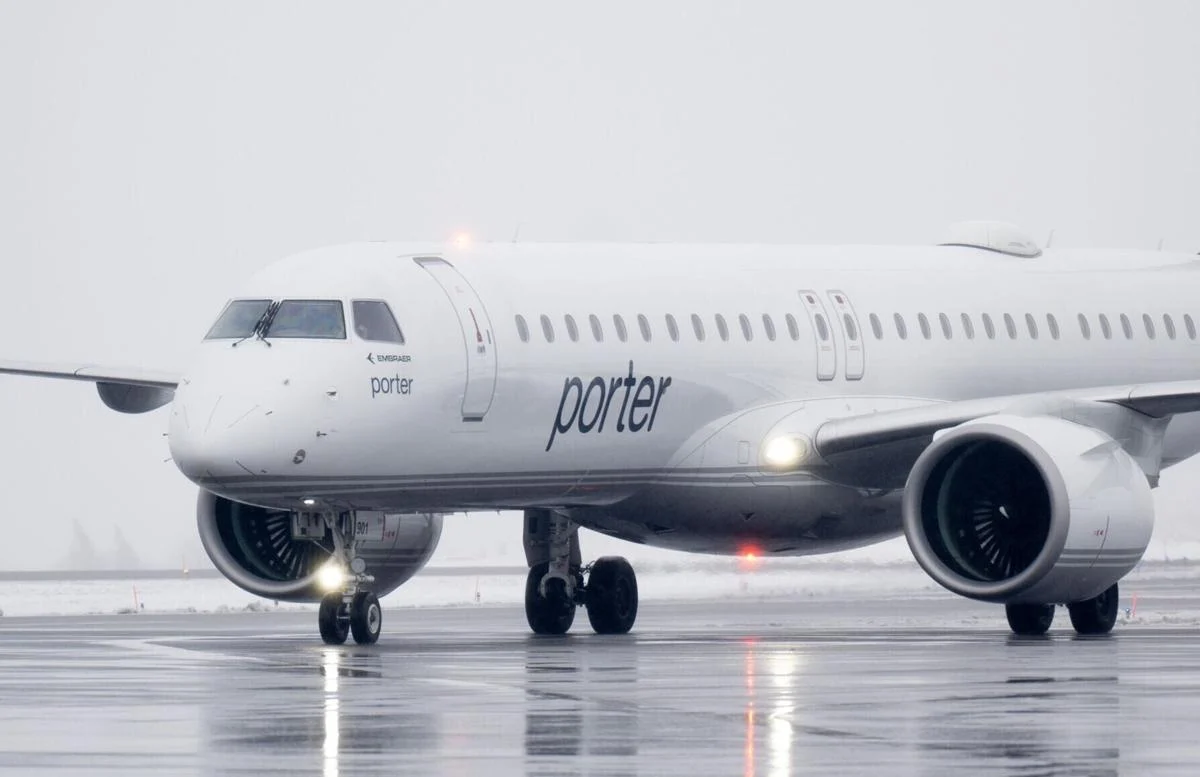
Max Global: The Porter Airlines flight canceled in Victoria has drawn attention after a young child refused to remain seated and secure their seatbelt before takeoff, turning a cabin-safety issue into a wider operational disruption. Porter Airlines said Flight PD444 had already left the terminal at Victoria International Airport and was moving toward the runway for a flight to Toronto when the child was seen standing in their seat and refusing to buckle the seatbelt. The accompanying parent and crew tried to resolve the issue but were unsuccessful, according to the airline.
Why Was the Porter Airlines Flight Canceled?
Porter Airlines Flight PD444 was scheduled to travel from Victoria International Airport in British Columbia to Toronto on August 6, 2026. According to Global News and PEOPLE, the aircraft had already left the terminal and was proceeding toward the runway when the safety issue occurred.
Porter said the aircraft could not take off while the child was not safely secured. The crew therefore returned to the terminal so the passengers involved could leave the plane. Their baggage also had to be removed.
The problem did not end when the aircraft returned to the terminal. The return triggered several operational steps that used up the remaining departure window.
Child Seatbelt Issue Sent PD444 Back to the Terminal
Porter told PEOPLE that the return required the aircraft to be bridged at the terminal, the passengers in question to deplane, their baggage to be retrieved, and flight plans and other paperwork to be handled again. Global News likewise reported that the airline had to remove the passengers and baggage and refile the flight plan.
Those steps extended the delay. Porter said Victoria International Airport’s runway closes at 12:30 a.m., and by the time the required procedures were completed, PD444 could no longer depart before that cutoff.
This distinction matters when explaining why the flight was ultimately canceled. The child’s unsecured seatbelt caused the crew to return to the terminal for safety reasons, while the cancellation itself followed because the resulting delay pushed the flight beyond the airport’s scheduled operating window.
Read also: Italy One Euro House: Discover the Ultimate Dream You Can Actually Own
Porter Airlines Flight Canceled After Airport Closure Deadline
Global News reported that the extra time required after the return to the terminal meant the flight could not leave before the runway closure. PEOPLE also quoted a Victoria International Airport spokesperson confirming that PD444 was delayed on August 6 and was later canceled after it could not depart before the airport’s scheduled airfield closure.
The disruption affected everyone booked on the Victoria to Toronto flight even though the original cabin-safety issue involved only the child and accompanying passenger. Once the aircraft returned, the airline still had to complete the required passenger, baggage, flight-plan, and paperwork procedures before attempting another departure.
What Happened to Passengers on Porter Airlines PD444?
Porter apologized for the effect on the other passengers. Global News said travelers were able to depart on a flight the following day.
PEOPLE reported that the rescheduled flight left Victoria on Friday, August 7. Citing FlightAware, PEOPLE said the flight departed at 10:49 p.m. local time and arrived in Toronto at 6:16 a.m. the next day.
No identifying information about the child or family was published in the reports reviewed for this article. The available reporting also does not establish why the child would not remain seated and secured. Any claim that the behavior was linked to a medical, developmental, or other condition would therefore go beyond the confirmed facts.

You might also like: Best Cities Netherlands: 5 Dutch Gems Beyond Amsterdam
Porter Airlines Child Seatbelt and Restraint Guidance
Porter Airlines publishes guidance for customers traveling with infants and children. According to the airline information cited by PEOPLE, a child safety seat or restraint device is required for an infant under age two when the infant occupies a separate aircraft seat.
Transport Canada separately recommends that children under two use an approved child restraint system during all phases of flight. The agency says an approved car seat offers stronger protection for an infant or child and can reduce the effects of unexpected turbulence. It also advises travelers to check airline-specific policies and follow the restraint manufacturer’s instructions.
The incident shows how a cabin-safety issue can lead to a wider operational disruption when an airport has a fixed closure deadline. Flight PD444 could not depart while the child was unsecured, and the return to the terminal required additional passenger, baggage, flight-plan, and paperwork procedures. Those steps pushed the flight beyond Victoria International Airport’s 12:30 a.m. runway cutoff, resulting in the cancellation and delaying passengers until the following day.


